Irrigation System Installation in Wakefield, RI: Zone Design, Site Conditions, and What the Build Involves
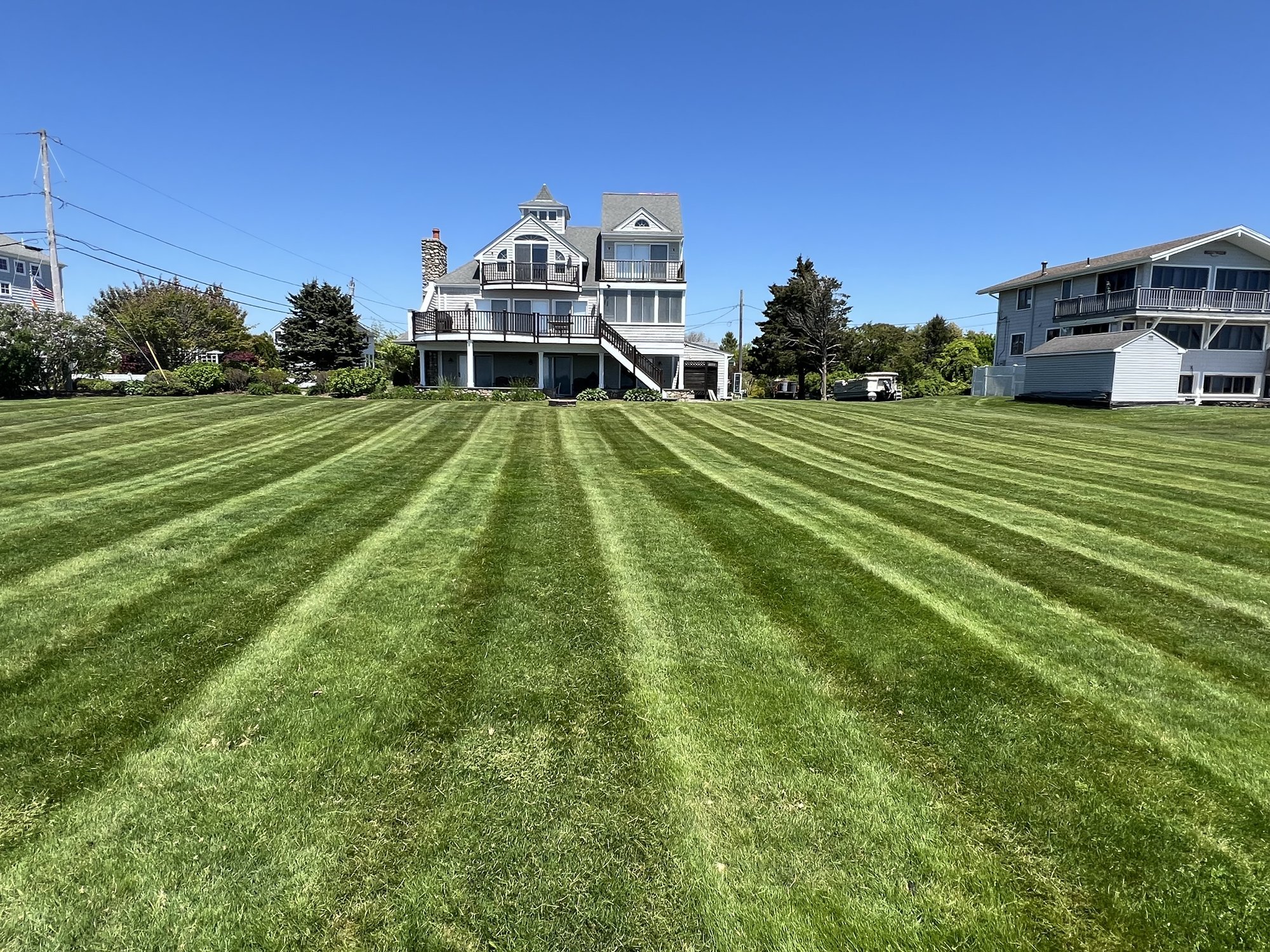
A lawn that browns in patches by mid-July while the beds beside it stay soggy is rarely a watering problem. It is a design problem, and it usually traces back to the day the pipe went into the ground. Irrigation system installation in Wakefield, RI asks more of a contractor than trenching and gluing fittings, because South County properties sit on glacial soil, take salt air off the water, and draw on supply pressure that varies street by street.
Peter Grandin started this company in 1993 as Grandin Landscape after studying horticulture at the University of Rhode Island, and our crews have spent three decades watching how Rhode Island ground behaves once the water turns on.
This guide walks through what happens on your property during the build, how zones get planned around the plants you actually have, what Rhode Island code requires at the water connection, and the questions worth asking before you sign anything.
What Does Irrigation System Installation Actually Involve?
The work starts long before anyone opens the ground. Our team measures the property, records static and dynamic water pressure at the source, identifies the meter or well capacity, and maps every planting area, turf area, slope, and hardscape edge that changes how water needs to land.
That survey produces a zone plan. Each zone groups plants with similar water demand and similar sun exposure, then gets matched to heads that deliver the right precipitation rate for that area. Turf rotors, spray heads for narrow strips, and drip line for shrub beds rarely belong on the same valve.
Installation itself follows a fixed order. Utility locates go in first. Crews pull the mainline through the property, set valve boxes, run lateral lines to each head location, install the backflow assembly at the water connection, wire the controller, then flush the lines before heads go on.
The final day is spent tuning. Every head gets adjusted for arc and radius, spray patterns get checked against hardscape and siding, and the controller gets programmed for the season the system is starting in. A system that leaves the truck perfectly specified still needs that afternoon of adjustment to perform.
Where the Quality Difference Hides
Most of what separates a good installation from a mediocre one is invisible once the sod goes back down: pipe depth, wire splice quality, valve box placement, swing joint use at each head, and how carefully the pressure math was done. Those choices decide how the system behaves in year eight, not year one.
How Long Does an Irrigation System Installation Take?
For a typical residential property in South County, active installation runs one to three days once crews are on site. A half-acre lot with straightforward access often finishes in a single day. Larger properties, multiple water sources, or heavy tree root zones push the schedule out.
The full calendar looks different. Site evaluation, design, permitting where a municipality requires it, and scheduling the water department for the tap or meter work usually add several weeks ahead of the install date. Spring books out early in Rhode Island, so a February conversation generally lands a spring start while an April call often points at early summer.
Weather moves the date more than anything else. Saturated ground compresses under equipment and heals poorly, so our crews hold off after heavy rain rather than leaving ruts across a lawn you have paid to keep in good condition.
How Many Zones Does a Wakefield Property Need?
Zone count follows available water, not property size. The governing number is how many gallons per minute the source delivers at working pressure. Divide that figure by the flow each head requires, and the answer sets how many heads run together on one valve.
A typical Wakefield home on municipal water supports somewhere around four to eight zones on a standard residential lot. Properties on a well, properties with long runs to a back lawn, or properties with separated garden areas often need more valves carrying fewer heads each.
Under-zoning is the most common fault our crews find on systems we are called in to repair. Too many heads on one valve starves the far end of the run, which produces exactly the pattern homeowners describe as dry spots that watering longer does nothing to fix.
Proper zoning also gives you control. Shrub beds under a roofline need a fraction of what open turf in full sun needs, and separating them means you stop drowning one area to satisfy another. Our landscape design work and our landscape construction crews plan those zones alongside the planting plan so the two documents agree.
Will Installing Sprinklers Tear Up an Established Lawn?
Established lawns recover better than most homeowners expect, because modern installation uses a vibratory plow rather than open trenching across turf. The plow pulls pipe through a narrow slit in the ground, leaving a seam a few inches wide instead of an open trench.
Open excavation still happens in specific spots: the valve box locations, the backflow connection, and anywhere an obstruction forces a hand dig. Those areas get restored at the end of the job.
Planting beds get more care than lawn, since roots matter more there. Crews hand-dig around established shrub root plates and route drip line around them rather than through them. Mature trees get the same treatment, with lines routed outside the critical root zone wherever the layout allows.
Expect the turf seam to close within two to three weeks in the growing season. A fall install takes longer to knit, which is one reason our crews plan lawn repair into the schedule rather than treating it as an afterthought. Our landscape maintenance team often handles the follow-up seeding on properties we already service.
What Is a Backflow Preventer and Why Does It Matter in Rhode Island?
A backflow preventer is the assembly that keeps irrigation water, and anything dissolved in it, out of the drinking water supply. Water in an irrigation line sits in contact with soil, fertilizer residue, and pet waste. A pressure drop in the municipal main without protection in place pulls that water backward toward the house and the street.
Rhode Island water suppliers require a tested, approved assembly on any irrigation connection to a public system. The device gets installed at a set height above grade, needs annual testing by a certified tester in most districts, and gets drained before winter along with the rest of the system.
This is one of the items worth confirming in writing before work begins. Ask which assembly type the contractor installs, who files the test paperwork with your water department, and what the annual test costs. A missing or failed assembly turns into a compliance problem that lands on you as the property owner.
Well-supplied properties follow different rules, since there is no public main to protect, though a check valve arrangement is still standard practice to keep the well head clean.
Do Smart Controllers Actually Reduce Water Use?
Smart controllers reduce water use when they are set up correctly, since a weather-based controller adjusts run times against local evapotranspiration data instead of running a fixed schedule regardless of conditions. On a coastal property that swings between a foggy stretch and a dry August week, that responsiveness matters.
The savings depend entirely on the underlying zone design. Good weather data does nothing for a valve that mixes drip line and turf rotors, because the two need completely different run times. Sound hydraulics first, smart control second.
Soil moisture sensors add a second layer by reading conditions in the root zone rather than in the air. On properties with heavy shade or a high water table near the pond edges around South Kingstown, sensors catch the saturation that a weather feed alone reads as dry.
Rain sensors remain the simplest worthwhile addition. Watching a system run through a steady downpour frustrates every homeowner who sees it, and a rain shutoff ends that behavior permanently.
What Happens to an Irrigation System Over a Rhode Island Winter?
Every line gets blown out before the first hard freeze. Water left in lateral lines, valves, or heads expands as it freezes and splits fittings, which turns into a spring of leak hunting and lawn repair.
Winterization uses compressed air, run zone by zone at a controlled pressure until each head discharges mist rather than water. The backflow assembly gets isolated and drained separately, and the controller gets shut down or set to a dormant program.
Spring startup reverses the sequence. The system gets recharged slowly to avoid a pressure surge, every zone runs while a technician walks the property, damaged heads get replaced, arcs get reset after winter heaving, and the controller gets programmed for spring conditions.
South County timing generally puts blowouts in late October through November and startups in April. Coastal properties near Narragansett Bay sometimes hold off a little longer in fall, though our crews schedule to the forecast rather than the calendar.
How Do Coastal Soil and Site Conditions Change the Design?
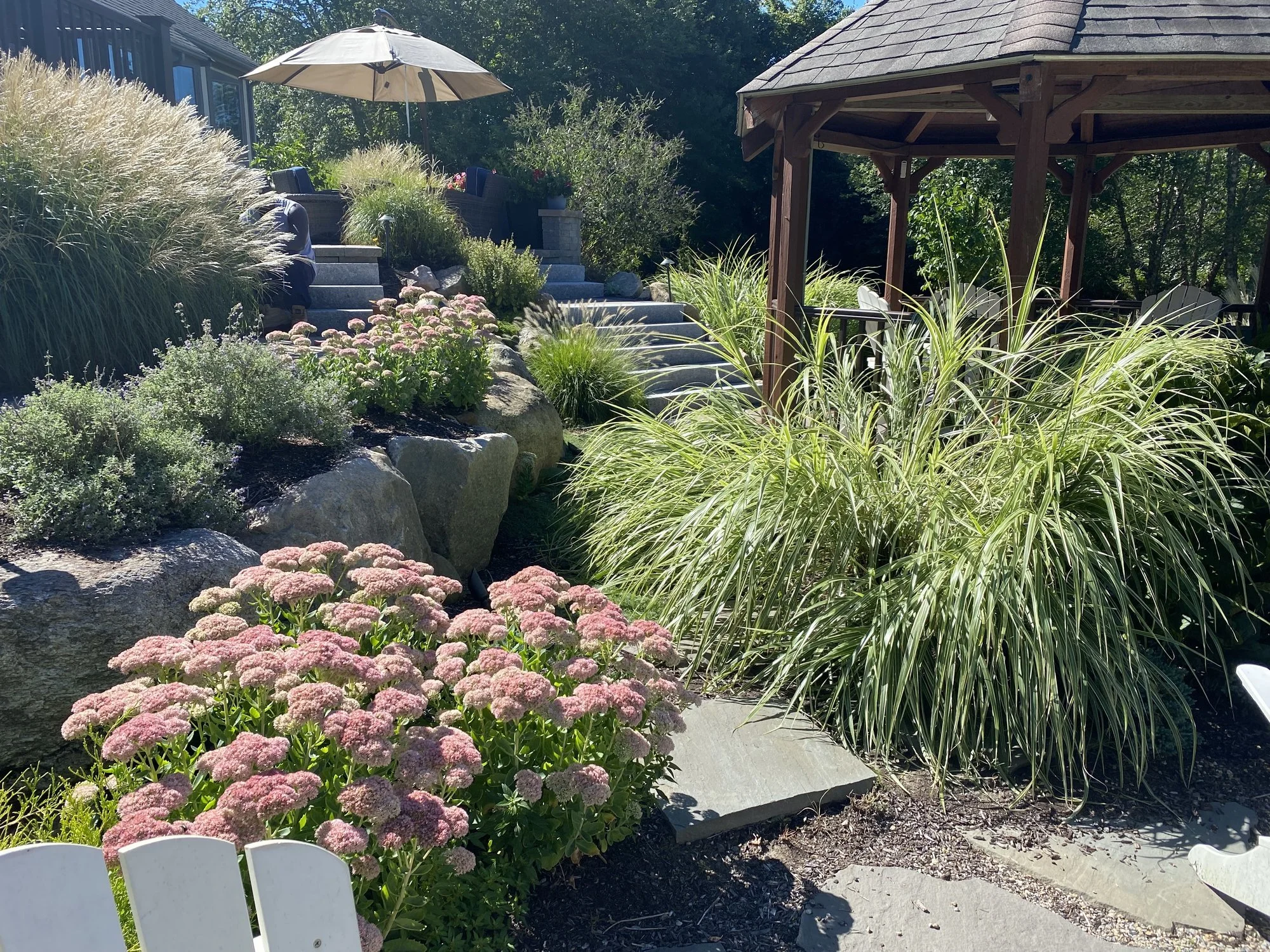
Southern Rhode Island sits on glacial outwash in much of the region, which drains fast and dries out quickly. Deeper, denser till appears further inland. The two behave nothing alike, and a schedule built for one wastes water on the other.
Sandy outwash soil calls for shorter, more frequent cycles, because water moves past the root zone before roots take it up. Tighter soils call for cycle-and-soak programming, where a zone runs in short bursts with rest between them so water infiltrates instead of sheeting off.
Salt exposure adds another factor closer to the shoreline. Salt-tolerant plantings in exposed positions have different water demands than protected beds on the leeward side of a house, and grouping them on one valve serves neither well.
Slopes, Shade, and Hardscape
Slopes deserve their own zones. Water applied faster than a grade absorbs it runs downhill and collects at the bottom, which is why a hillside lawn often shows a dry crown and a soggy toe. Head-to-head spacing with check valves at the low points solves it.
Shade changes demand as much as soil does. A north-facing bed against the house needs a fraction of the water an open south lawn needs in the same week.
Hardscape sets the boundaries. Patios, walkways, and driveways define where spray patterns end, and heads placed without accounting for them stain stone and waste water on pavement. You see that coordination in the projects on our gallery and in the detail on estates like the Watch Hill property and our Jamestown waterfront residence.
What Should You Ask an Irrigation Contractor Before Signing?
Start with the design. Ask to see a zone map showing head locations, valve positions, and the flow calculation behind each zone. A contractor who quotes a price without measuring pressure at your source is guessing, and you inherit the guess.
Ask about materials by name. Head brand, valve brand, wire gauge, pipe type, and swing joint use tell you more about long-term performance than the headline number on the proposal.
Ask who handles the water department paperwork, the backflow test, and the annual recertification. Ask what the warranty covers on labor separately from parts, and how long each runs.
Ask about seasonal service. A system installed by a company that also performs your blowout and startup keeps one crew accountable for how it performs in year five. Homeowners in South Kingstown and North Kingstown often tell us that continuity was the deciding factor.
Where Irrigation Fits Inside a Larger Landscape Project
Sequencing saves money. Pipe goes in cleanly before sod, before plantings, and before patios and walkways get set. Retrofitting a system around finished hardscape means boring under stone or accepting compromised coverage.
Planting decisions and irrigation decisions belong in the same conversation. Grouping plants by water demand at the design stage produces a simpler system with fewer valves, which lowers both the install cost and the long-term water bill.
New lawns need a different program than established turf for the first two months, and new plantings need supplemental drip in their first two seasons regardless of rainfall. Our earlier writing on lawn care through the Rhode Island year and on mulching practice around beds covers how those pieces work together. If you are still deciding on system type, our guide to choosing the right irrigation system covers that ground.
Budget planning belongs in the same stage as design. Our financing options let homeowners phase a larger property improvement without splitting the irrigation work across two seasons, which is generally the more expensive path.
Schedule an Irrigation System Installation Consultation with GrandScapes
Your landscape represents a real investment, and a watering system designed around your actual soil, pressure, and plantings protects it through every South County summer. Our team walks the property, measures what is there, and designs a system that fits the ground rather than a template.
Talk with us about irrigation system installation for your Wakefield, RI home, and start the conversation with the crew at GrandScapes.
In Summary
Does a Wakefield, RI property need a permit for irrigation system installation?
Requirements vary by municipality and water district. The consistent requirement across Rhode Island public water systems is an approved, tested backflow assembly at the connection, with annual recertification filed to your water supplier. Our team handles that paperwork on the projects we install.
When is the right time of year to schedule irrigation system installation in South County?
Spring and early summer are the most common install windows, and fall installs work well when the schedule allows time for turf to knit before dormancy. Design and site evaluation happen in any season, and booking the design phase over winter secures a spring start date.
How many zones does an average South Kingstown or Narragansett home need?
Most residential lots land between four and eight zones, set by the gallons per minute available at the source rather than by lot size. Wells, long runs, and separated garden areas push that number higher.
Who maintains the system after installation?
Our crews perform fall blowouts, spring startups, head adjustments, and controller programming for properties across Wakefield, South Kingstown, Narragansett, and the surrounding towns, so the same team that built the system keeps it running.